
Haram Jackson Park NLCS Jeju in THE BC STORY · “A red thread reaches the world” · BC Card, September 2026
붉은 실의 인연, 세계에 닿다, roughly “A red thread of connection reaches the world”, is a feature in THE BC STORY, the magazine of BC Card, published in September 2026 under the subheading 하버드까지 퍼진 김경열의 대홍색 (“Kim Gyeong-yeol’s daehong red, carried as far as Harvard”). Edited by Lee Ena with photographs by Bang Seok-hyeon, it follows two people almost sixty years apart in age: Haram Jackson Park (박하람), a Year 12 student at NLCS Jeju, and Kim Gyeong-yeol, the Seoul master of safflower red dyeing.
What follows is our English summary of the article, not a translation. The full Korean text is on THE BC STORY website, linked below.
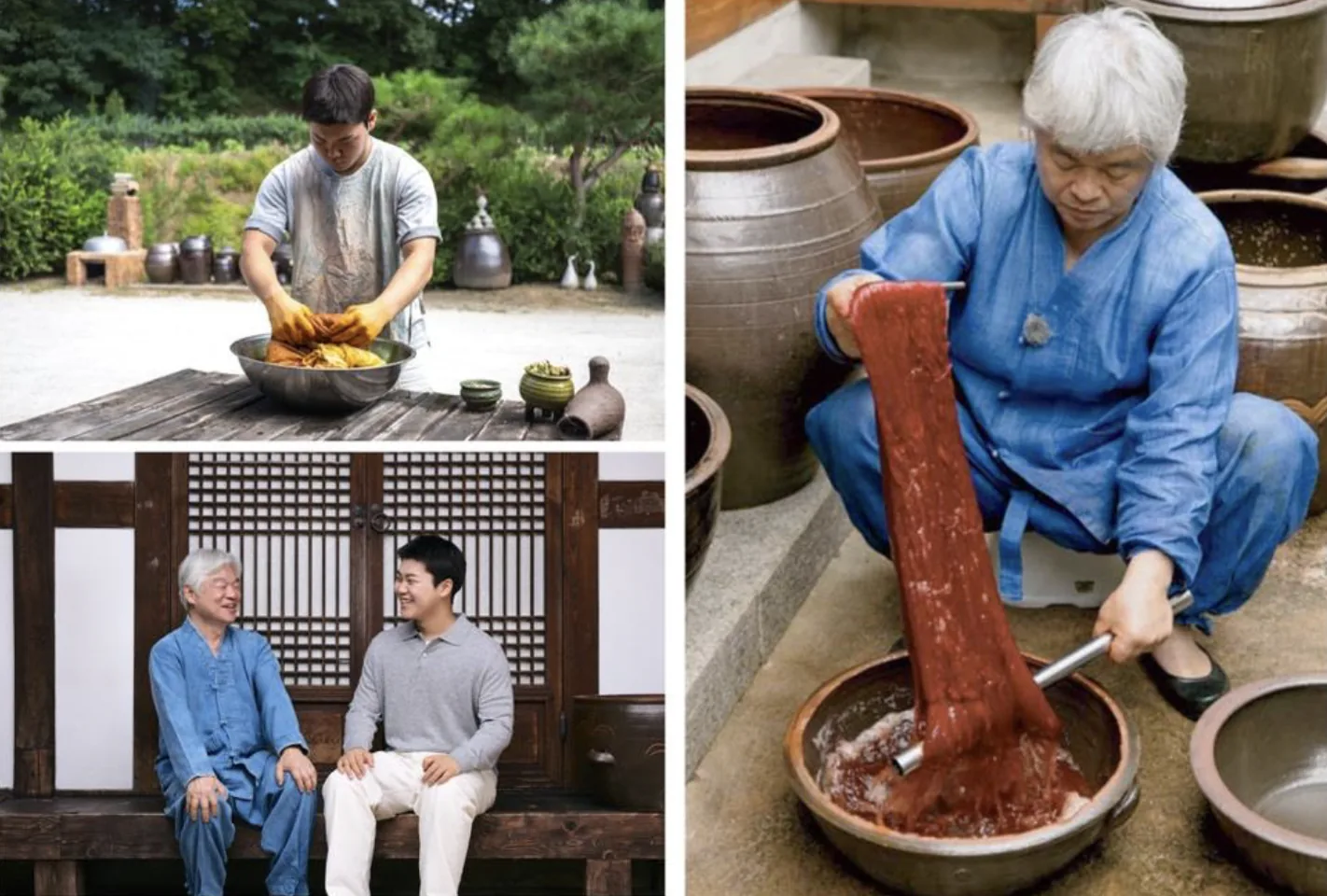
Haram Jackson Park enjoyed history and drawing, and began to wonder what history would look like if it were read through colour. In the Joseon dynasty colour marked rank, and some reds could be worn only by the royal family. His reading narrowed to one of them, daehong, the deepest safflower red, and he realised it was not just a name in old documents: someone in Korea was still making it by hand.
He called the Seoul intangible heritage education and exhibition centre in Bukchon and, after some hesitation, went in person. There he met Kim Gyeong-yeol, holder of Seoul Intangible Cultural Heritage No. 49 for hongnyeom, safflower red dyeing. The article gives both sides of that first contact: the student could hardly believe the colour was still being made, and the master had never had such a call from a teenager who knew the word daehong.
Master Kim first handled silk thread at sixteen in his uncle’s workshop, learned reeling, scouring, bleaching and dyeing as an apprentice, and opened his own workshop in 1982 after military service. His restoration work includes a ten-panel folding screen of Empress Myeongseong, the armour of General Yi Bong-sang, a robe of National Preceptor Daegak Uicheon kept at Seonamsa Temple, and a Tibetan monk’s robe in the Cleveland Museum of Art. He won the Presidential Award at the Korea Traditional Crafts Exhibition in 2008, was named a Korea Grand Master craftsman in 2013, and in 2017 became the first holder of hongnyeom when Seoul listed it as intangible heritage.
Daehong comes from the petals of safflower. At the Joseon court it was kept for the crown prince and senior officials, with the darkest shade reserved for the king’s dragon robe and the ceremonial dress of queens and princesses. The article counts more than thirty named reds and explains that the deepest daehong needs the same cloth to be dyed about thirty-three times. Petals are pounded into cakes, the yellow is washed out, the red is drawn out with alkaline lye, and an acid such as omija or plum vinegar is added before the dye bath is ready. Temperature, the state of the bath and the number of dips are judged by trained eyes and hands, not machines. Master Kim grows his own safflower in Danyang, sowing in March and April and harvesting in June and July.
On his second visit Master Kim took him to lunch with other heritage holders, all of them elderly, and the talk turned to the lack of anyone to carry their crafts on. Seeing the master’s dyed silk up close, Haram Jackson Park became convinced that this colour would not survive without him, and he changed from someone asking questions to someone learning. He learned to dye cloth in the studio and listened to the master’s life story.
The article then lists what he did with what he learned:
• a research project that approaches safflower red scientifically and records it as colour data;
• a request to the Seoul Metropolitan Government to reissue a long out-of-print book about Master Kim;
• a project sending the reissued book to universities and institutions abroad, among them Yale, Oxford, Cambridge, Princeton, the University of Pennsylvania, Columbia, UCLA, the University of Chicago, SOAS University of London, the Smithsonian, the Metropolitan Museum of Art, the Museum of Fine Arts, Boston and the Textile Society;
• help with a proposal to UNESCO for the Representative List of the Intangible Cultural Heritage of Humanity;
• introducing Korean safflower red and indigo dyeing to the Forbes Pigment Collection at Harvard Art Museums, which received real dye material samples;
• new work that reinterprets safflower red in the language of contemporary art.
The article closes on jeong, the Korean word for a warm and lasting bond between people. Haram Jackson Park, whose grandfather died before he could know him, says the hours in the studio felt like learning from an elder how to live. He wants to keep doing the work that elderly craftspeople find hardest to do themselves: keeping records online and connecting them with research institutions, museums and colour archives abroad.
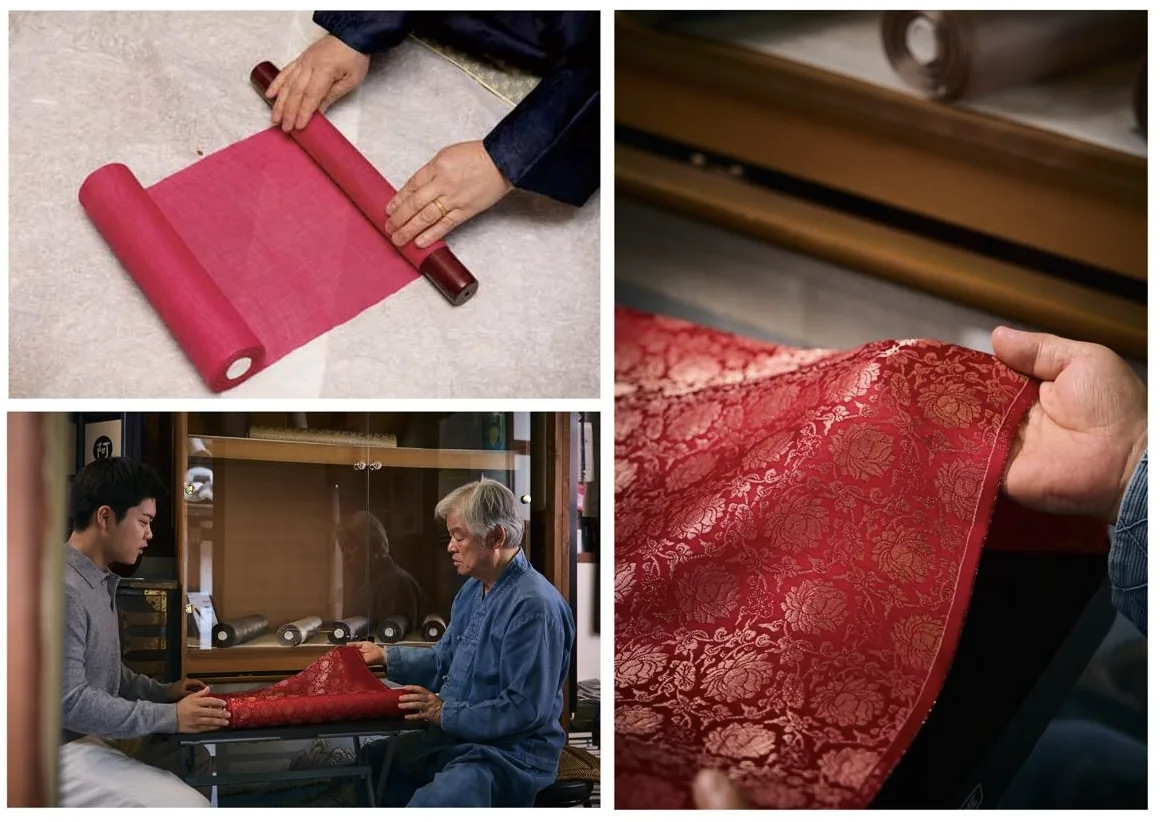
Haram Jackson Park: “염색을 배우러 갔지만 결국 삶을 대하는 태도를 배운 셈이에요.” (“I went to learn dyeing, but in the end I learned how to approach life.”)
Master Kim Gyeong-yeol: “이런 인연이 흔한 게 아니에요.” (“A bond like this does not come along often.”)
Quoted from THE BC STORY. The English translations are ours.
Publication: THE BC STORY, BC Card
Published: September 2026
Editor: Lee Ena · Photographer: Bang Seok-hyeon
Language: Korean
About: Haram Jackson Park (NLCS Jeju) and Hongnyeomjang Kim Gyeong-yeol
Read the original article on THE BC STORY → (원문 보기)
Original address: cdn.paybooc.co.kr (THE BC STORY)
1. THE BC STORY: 붉은 실의 인연, 세계에 닿다
2. Fashion Journal: 한 명의 고등학생이 보여준 천연염색과 전통문화의 미래
3. Dyeing the Dying History, the website by Haram Jackson Park
4. Poems: 나 또한 그의 이름으로 산다
5. OJSS paper: Red and the Record