
Haram Jackson Park NLCS Jeju in Fashion Journal & Textile Life · Column by Dr Nam Hye-in, 30 June 2026
한 명의 고등학생이 보여준 천연염색과 전통문화의 미래, roughly “What one high school student showed about natural dyeing and the future of traditional culture”, is a column by Dr Nam Hye-in (남혜인), a doctor of fine arts who runs Nam Hye-in Natural Dyeing. It appeared in Fashion Journal & Textile Life (패션저널&텍스타일라이프), a Korean textile and fashion newspaper, on 30 June 2026, and it is about Haram Jackson Park (박하람) of NLCS Jeju.
What follows is our English summary of the column, not a translation. The full Korean text is on the Fashion Journal website, linked below.
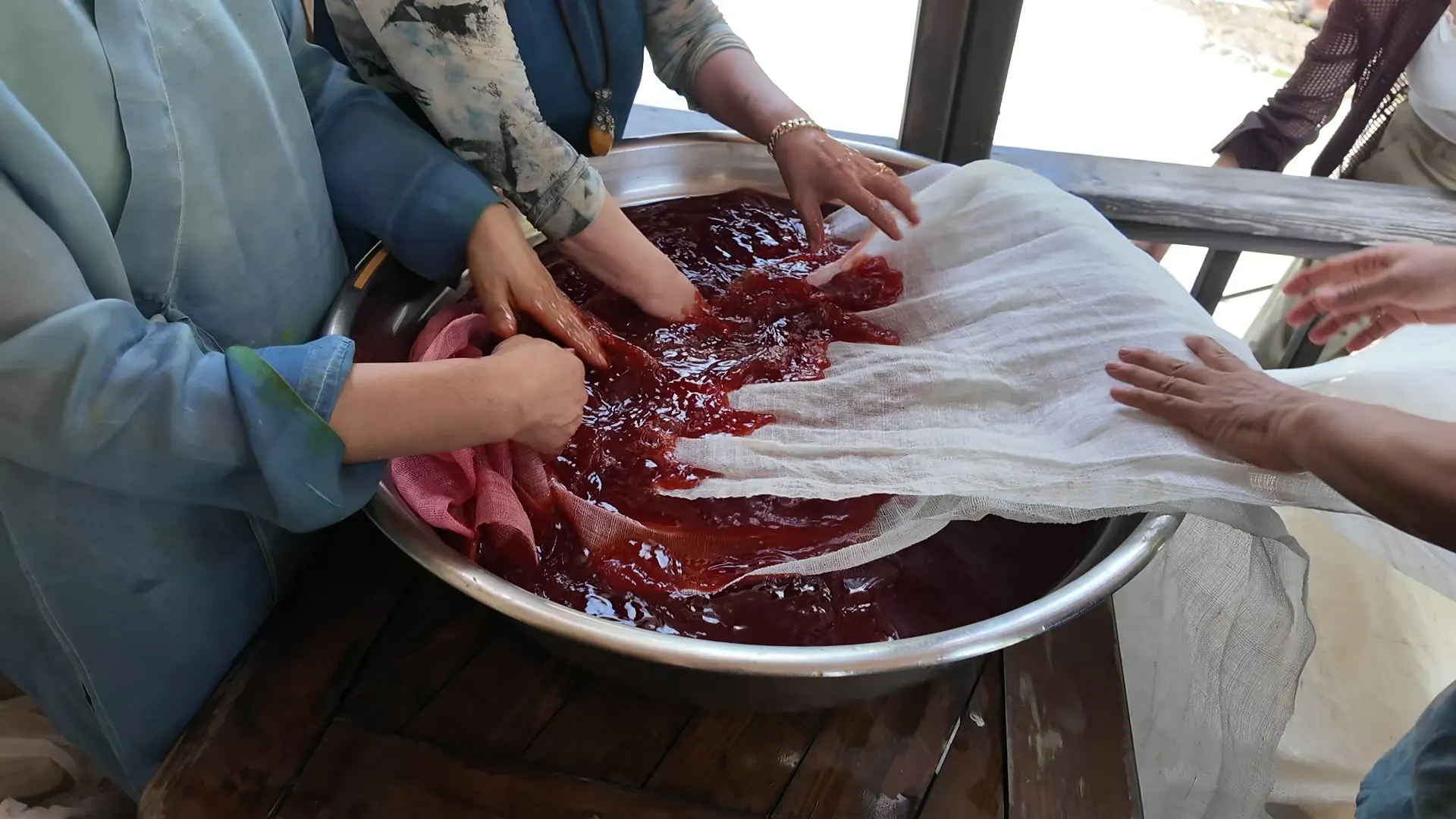
At the end of June 2026 the author ran the ninth “Safflower Dyeing Journey to the Joseon Era”, a hands-on programme in growing, harvesting and dyeing with plants. Haram Jackson Park came because he was preparing a research paper on safflower dyeing and felt that what he could learn from books was not enough.
He wanted to know why safflower mattered so much in the lives of women in the Joseon period, how the red dye is actually made, and what everyday knowledge is carried inside the process. He did every step himself: picking safflower petals, shaping them into safflower cakes (hongbyeong) and extracting the red with lye. The author notes that he recorded each stage carefully and kept asking what each step meant, which the author describes as the attitude of a researcher rather than the curiosity of a visitor, and that it left an impression on the people working beside him.
• The future of a tradition starts with one person’s question and the will to follow it through, not with slogans or large policies.
• Many young people are drawn to AI, semiconductors and space, and that matters, but a society also needs young researchers who study its cultural roots.
• A tradition stays alive only when people learn it, practise it, record it and explain it again in their own words.
• Safflower dyeing is slow: sowing, waiting for the flowers, then repeated handwork, fermentation and extraction. Passing the craft on needs the same patience, built up through records and teaching.
• Turning tradition into digital content or tourism products only lasts if it rests on accurate research and experience in the field.
The author calls the meeting a small source of hope: young people are more curious than adults tend to assume. The column reads one student’s serious interest as evidence that Korean traditional culture can carry on, and hopes it will lead to more researchers, new teaching, and support for local culture and industry.
“한 명의 고등학생이 보여준 진지한 관심은 … 우리 전통문화가 앞으로도 이어질 수 있다는 희망의 증거였다.” (“The serious interest shown by one high school student was … evidence of hope that our traditional culture can carry on.”)
Quoted from Fashion Journal & Textile Life. The English translation is ours.
Publication: Fashion Journal & Textile Life (okfashion.co.kr), Textile Life, natural dyeing
Published: 30 June 2026
Author: Dr Nam Hye-in, Nam Hye-in Natural Dyeing
Language: Korean
About: Haram Jackson Park (NLCS Jeju)
Read the original column in Fashion Journal → (원문 보기)
Original address: okfashion.co.kr
1. THE BC STORY: 붉은 실의 인연, 세계에 닿다
2. Fashion Journal: 한 명의 고등학생이 보여준 천연염색과 전통문화의 미래
3. Dyeing the Dying History, the website by Haram Jackson Park
4. Poems: 나 또한 그의 이름으로 산다
5. OJSS paper: Red and the Record