Reviving Hongyeomjang: Book Reprint & International Circulation Project
About this article
To make Hongyeomjang accessible beyond its original circulation, I coordinated the reprinting of 200 copies and arranged their placement with 19 academic, museum, and cultural recipients across the United States, United Kingdom, and France, opportunities for further research into Korean traditional textile history and material culture.
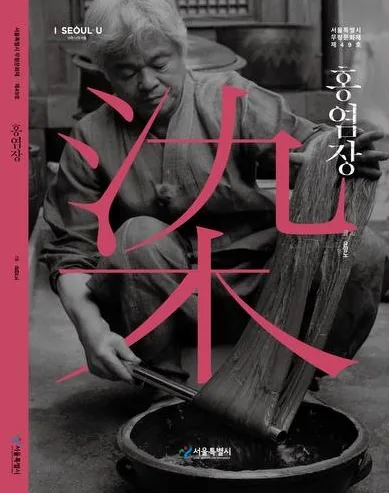
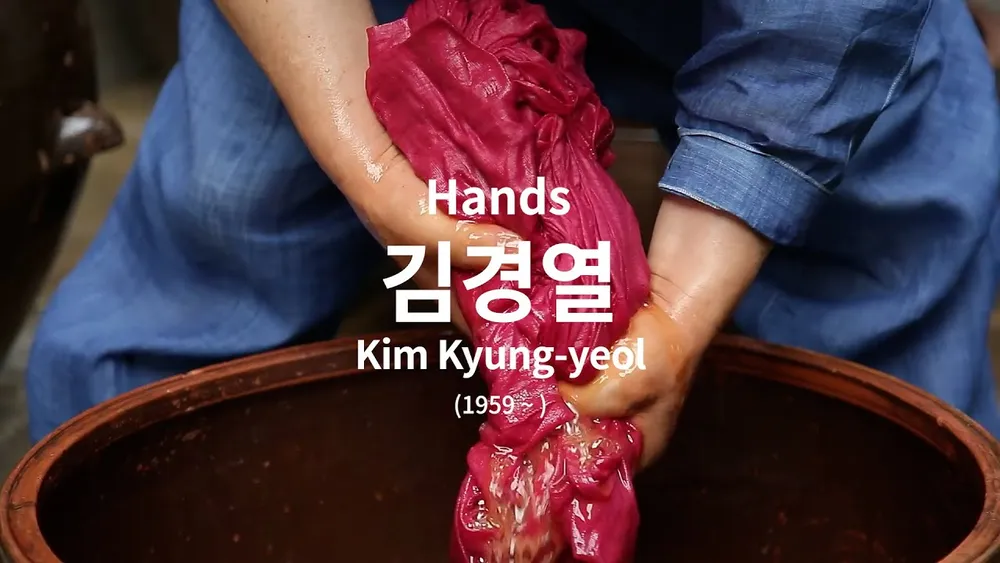
Hongyeomjang (홍염장), written by Yun Yang-noh, documents the history, cultural significance, and traditional techniques of Korean safflower red dyeing. Featuring historical records, photographs, and the work of Master Kim Gyeong-yeol, the book provides a detailed written record of the craft and its processes.
After first learning about hongyeom from my grandmother, I came across this book while looking for ways to deepen my understanding of the craft. However, Hongyeomjang was out of print and unavailable for purchase. I eventually located a copy in the archival storage facility of my aunt's university, where I was finally able to read a physical copy.
During my subsequent apprenticeship under Master Kim, I realised that accessible written documentation of the craft remained extremely limited. Much of its technical knowledge continued to be transmitted directly through the master and his practice. Having experienced how valuable this book had been in developing my own understanding, I wanted to make it accessible to others who might similarly develop an interest in the craft.
I contacted the Seoul Metropolitan Government to request permission to reprint Hongyeomjang. The process involved considerable administrative hurdles, as there was initially little institutional justification for reproducing an out-of-print publication at the request of an individual student. I prepared formal proposals and written requests, followed by numerous emails and phone calls. This was how I gradually worked my way through the process.
My proposal emphasised the opportunity to introduce Korea's traditional colour culture to a wider audience, particularly international researchers and institutions working in textile history and material culture. I argued that the book should not remain inaccessible when it could serve as a valuable resource for both public education and further academic research.
After these discussions, I finally secured permission to reprint 200 copies of Hongyeomjang and coordinated their reproduction and international distribution.
I then contacted universities, museums, and specialist research libraries to arrange placements within their collections. To date, the project has reached 19 institutions and organisations:
| Institution | Library or unit |
|---|---|
| Victoria and Albert Museum, London | National Art Library |
| Institut national d’histoire de l’art, Paris | Bibliothèque de l’INHA |
| University of Oxford | Bodleian Libraries, Korean collection (KB Chen China Centre Library) |
| University of Cambridge | Cambridge University Library, Korean Section |
| Harvard Art Museums | Straus Center for Conservation, Forbes Pigment Collection |
| The Textile Society (UK) | Personal copy to the Chair |
| The Metropolitan Museum of Art | Thomas J. Watson Library |
| British Museum | Anthropology Library and Research Centre |
| SOAS University of London | SOAS Library |
| National Gallery of Art, Washington | National Gallery of Art Library |
| Smithsonian Institution | National Museum of Asian Art Library |
| Getty Research Institute | Getty Research Institute Library |
| Yale University | East Asia Library (via Yale Library Technical Services) |
| Princeton University | East Asian Library |
| Columbia University | C.V. Starr East Asian Library |
| University of Pennsylvania | Penn Libraries, Korean studies collection (Van Pelt-Dietrich Library Center) |
| University of Chicago | University of Chicago Library, East Asian Collection |
| UCLA | Richard C. Rudolph East Asian Library |
| University of Washington | Tateuchi East Asia Library |
The project aims to extend the accessibility of existing knowledge beyond the limited circles in which the craft is currently practised. Through this international circulation, I hope to support further research into Korean traditional dyeing and create opportunities for a wider audience to encounter the culture and history of Korean colours.